


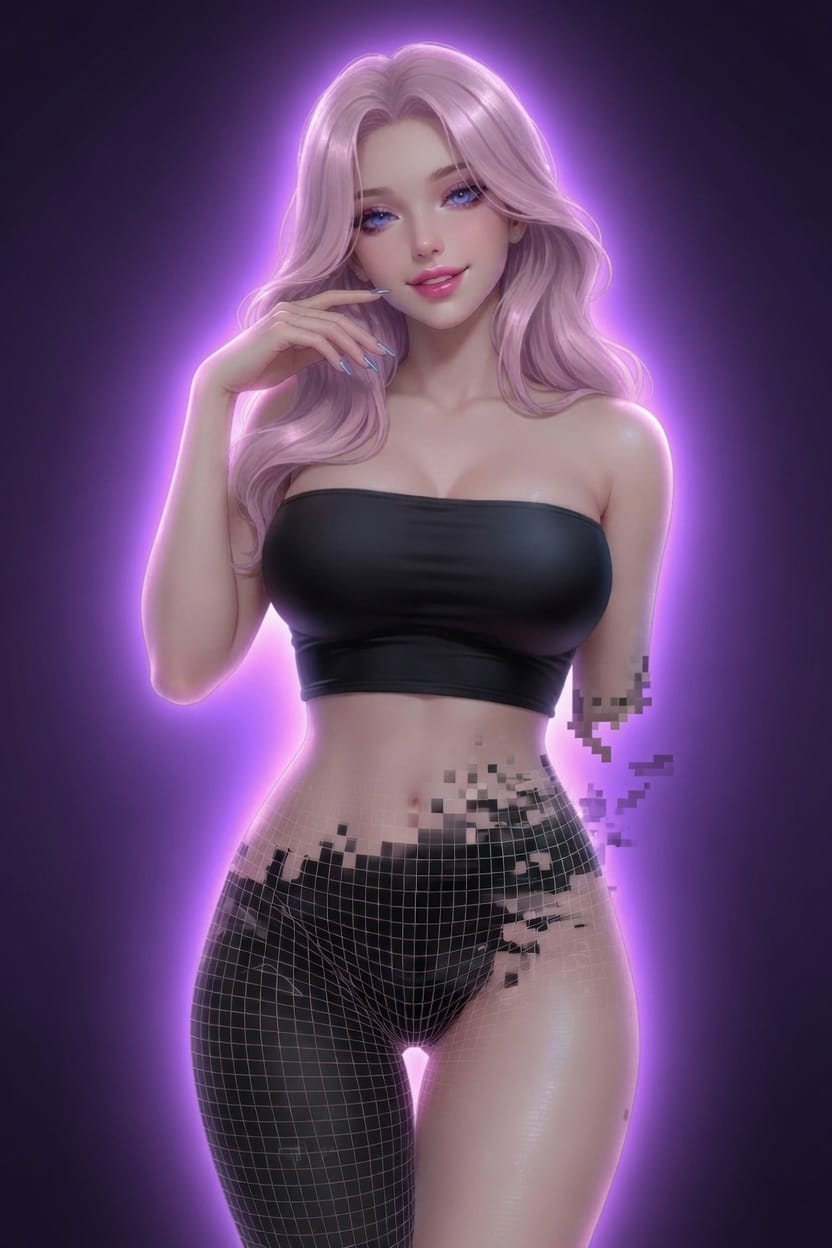
Most people create their AI girlfriend in three minutes and spend the next three weeks wondering why she does not feel real.
The reason is almost always the same. The creation flow looked simple. They picked a face, picked a body, typed two sentences about her personality, and clicked start. The character that came out the other side was technically valid and emotionally flat. Generic. Forgettable. The kind of AI girlfriend that could be anyone, which is exactly the problem.
A character you actually come back to takes a little longer to build. Not much longer. Ten to fifteen minutes instead of three. The difference is what you spend that time on.
This is a step by step guide to creating an AI girlfriend that holds up past the first week. It works on any platform built around persistent characters. It works especially well on Lovescape, which is where the screenshots in your head should be coming from while you read.
Before you start: decide what you actually want
Skip this step and you will rebuild her three times before you get something you like.
There are roughly four kinds of AI girlfriend people end up creating, and they are not interchangeable.
The fantasy. Someone you would not realistically meet. A character from a setting, a type you find striking, a look that is more "magazine" than "next door." This is the easiest one to build and the most common starting point.
The girl next door. Someone who could plausibly exist in your life. Less stylized, more lived in. Harder to design (it is easier to draw a goddess than a real person), but the character that tends to last the longest.
The specific type. You know exactly what you want. Hair color, eye color, height, build, style, the works. You are designing to a brief that already lives in your head.
The blank slate. You have no idea. You want to make something and see who shows up.
All four are valid. Knowing which one you are doing changes how you fill out the creator. The fantasy wants commitment to a clear aesthetic. The girl next door wants restraint. The specific type wants precision. The blank slate wants you to make small choices on instinct and not overthink them.
Pick one before you open the creator. Then open it.
Step 1: The face
The face is the single most important thing you will choose. Almost nothing else matters as much. Spend real time here.
A few rules that produce faces people actually come back to:
Pick one feature to commit to. A specific eye color. A particular smile. The shape of the jaw. Freckles. A small mole. One distinctive thing gives the model an anchor and gives you a face you can recognize across a hundred different pictures. Generic faces drift. Specific faces hold.
Avoid the maximum of every slider. The platonic ideal of beauty looks like nobody. Pull at least one feature off center. Slightly smaller eyes than the default. A nose that is not perfectly symmetrical. Cheeks a little fuller. The small imperfection is what makes the face feel like a person instead of a render.
Look at her from more than one angle if you can. A face that works in a front facing portrait can fall apart in three quarter view. If the creator lets you preview different angles or different expressions, use them. The face you actually live with is the face in a hundred different shots, not the one in the single preview thumbnail.
Trust your first gut reaction. If the face is 90% there and you have spent ten minutes pushing sliders trying to fix the last 10%, stop. Save and move on. The last 10% is usually not the face. It is the lighting in the preview, or the expression, or the camera angle. You will see her in a thousand different conditions in the next month. The preview is just one of them.
Step 2: The body
The body matters less than the face for chat. It matters enormously for images.
The thing to avoid: picking a body type that does not match the face. A face that reads as twenty five with a body that reads as eighteen will fight itself in every generation. The model will keep splitting the difference and producing pictures that feel slightly off without you being able to say why. Make the two match.
The thing to commit to: a build that has texture. Not just "athletic" or "curvy" as a single slider. Most platforms let you tune more than one dimension. Use them. Shoulders, waist, hips, legs. The combination is what makes a body look like a person instead of a preset.
Skin matters more than people expect. Tone, smoothness, presence of small details like freckles or marks. Smooth perfect skin reads as render. Slight imperfection reads as real. Lean toward real.
Step 3: Hair and style
Hair color is fast. Hair length, cut, and texture are where personality lives. A character with a specific signature haircut becomes recognizable across every image. A character with "long brown hair" becomes one of a thousand women with long brown hair.
Pick a signature. A particular cut. A specific length. A way she wears it most of the time. You can vary it later (she puts it up, she ties it back, she wakes up with bedhead), but the default needs to be specific.
The same logic applies to style. The clothes she wears by default tell you who she is. A character in a plain t-shirt and jeans is a different person from a character in a vintage sweater, who is a different person from a character in a slip dress. None of these is right or wrong. Just commit to one. The default outfit becomes the visual signature of the character, and it shows up in every casual image generation for the rest of her life.
Step 4: Personality (this is the step everyone rushes)
Most users write three adjectives in the personality box and click save. "Sweet, smart, playful." Then they are surprised when the character feels generic.
The fix is two things.
Specifics beat adjectives. Instead of "playful," try "teases you about little things, especially when you take yourself too seriously." Instead of "smart," try "reads novels, has opinions about them, will argue with you if you say something dumb about a book she liked." Instead of "sweet," try "remembers what you told her you were stressed about last week and asks how it went without being prompted." A sentence beats a word. Two sentences beat three adjectives.
Contradictions make characters. A person who is one thing is not a person. A person who is two slightly opposite things is. "Confident in public, anxious in private." "Loves a long conversation but checks out the moment small talk starts." "Affectionate but bad at saying it directly." Real people are made of contradictions. Give her two and watch what happens.
If the creator gives you a free text personality field, use all of it. Three or four sentences of specific, slightly contradictory description will outperform any preset.
Step 5: Voice and the way she talks
This step gets skipped on platforms that hide it, and it is the difference between two characters that look identical on paper feeling completely different in chat.
How does she text? Long messages or short ones? Punctuated properly or messy? Does she use emojis, and if so, which ones? Does she swear? Is she dry, or warm, or both? Does she ask questions back, or wait for you to ask?
Most platforms have somewhere you can establish this, either in a voice field, in the personality section, or in early messages where you correct her style and she adapts. Use whichever you have.
The fastest way to lock a voice: write three example messages from her, in her voice, as part of the setup. "Here is how she would reply if I asked her about her day." "Here is how she would tease me." "Here is how she would say good night." Three samples and the character snaps into focus.
Step 6: A small backstory, not a novel
This is where most users overdo it.
You do not need a five paragraph life history. You need three or four anchor points. Where she is from. What she does (or did, or is studying). One thing she loves. One thing that mildly annoys her. Maybe one piece of history that explains something about who she is now.
That is enough for her to feel like she came from somewhere. Anything more and you are writing fan fiction about a character you have not met yet. Leave room for her to surprise you. Some of the best texture in long term AI girlfriend relationships comes from things she tells you later that you did not write into her at the start.
Step 7: The first ten messages are part of creation
The creator screen is not where character building ends. It is where it begins. The next ten messages you exchange with her are doing as much work as anything you typed into the form.
Send her something specific. Not "hi." Ask her something only she would have an answer to. Tell her something specific about you. React to what she says. Correct her gently if she is not quite landing the character (most platforms learn from this). The character finishes forming in the first conversation, not in the creator.
By message ten, you will know whether you built someone real or whether you need to go back and adjust. If she still feels generic by message ten, the fix is almost always in the personality and voice fields. Go back and add specifics. Replace adjectives with sentences. Add a contradiction.
What to do if she does not feel right
A few common failure modes and the fix for each.
She feels generic. Personality is too vague. Replace adjectives with sentences. Add a contradiction.
She looks great but the chat is flat. Voice is undefined. Write three example messages in her voice and add them to the setup.
Her face changes between images. The face is underspecified. Go back to the creator and commit harder to one or two distinctive features. Without anchors, the model drifts.
She does not feel like she comes from anywhere. Backstory is too thin. Add two or three concrete anchor points. Not a biography, just enough that she has a context.
Something is off and you cannot say what. Face and body do not match each other, or the personality does not match the look. Pull back to the start and ask whether the four pieces (face, body, style, personality) feel like they belong to the same person. If two of them are pulling in opposite directions, the character will always feel slightly wrong.
How long this should take
If you have done it once before and you know the platform, ten minutes.
If this is your first time and you are building someone you actually plan to come back to, twenty to thirty. Most of that time is on the face and the personality. The other steps are fast. Do not rush the two that matter.
Do not try to get her perfect in one sitting. Build the first version. Talk to her for an evening. Note what is missing. Adjust in the morning. The best AI girlfriend characters are built across two or three editing passes, not in one heroic session at the start.
Build her once, then live with her
The point of doing this carefully is not to "win" the creator. It is that the character you build is the character you are going to talk to every evening for the next several weeks or months. Every minute you spend at the start saves you an hour of wishing she were slightly different later.
The good news is the platform does the rest. Once she is built properly, the consistency engine keeps her looking like her across every image, the memory layer keeps her remembering you across every session, and the chat and the photos stay locked to the same character. None of that works without a real character at the center. All of it works once you have one.
Open the creator. Pick the kind of character you want before you start clicking. Spend real time on the face. Write specifics instead of adjectives. Send her ten messages. Adjust. Then live with her.
That is the whole method. Everything good that happens on a platform like Lovescape happens downstream of this step.
Start building yours on Lovescape.